Why we built Peoplemore without outside money
„We started without money because we wanted to be independent and have the freedom to build the company we want.” That sentence explains most of the decisions behind Peoplemore. I am one of its co-founders and its CEO. I co-own it, so read what follows as a founder’s account, not a neutral case study: peoplemore.pl.
Before Peoplemore, I spent many years in large organisations. As a board member at Comarch, I was part of growing the telecom business by 220% to €100M and from 800 to 1,400 people. Later, as COO at Ailleron, I saw the Fintech division triple its revenue in three years and become profitable. Those years taught me how big IT organisations work. They also showed me how much of a leader’s energy goes into explaining decisions to people who are far from the client and far from the delivery.
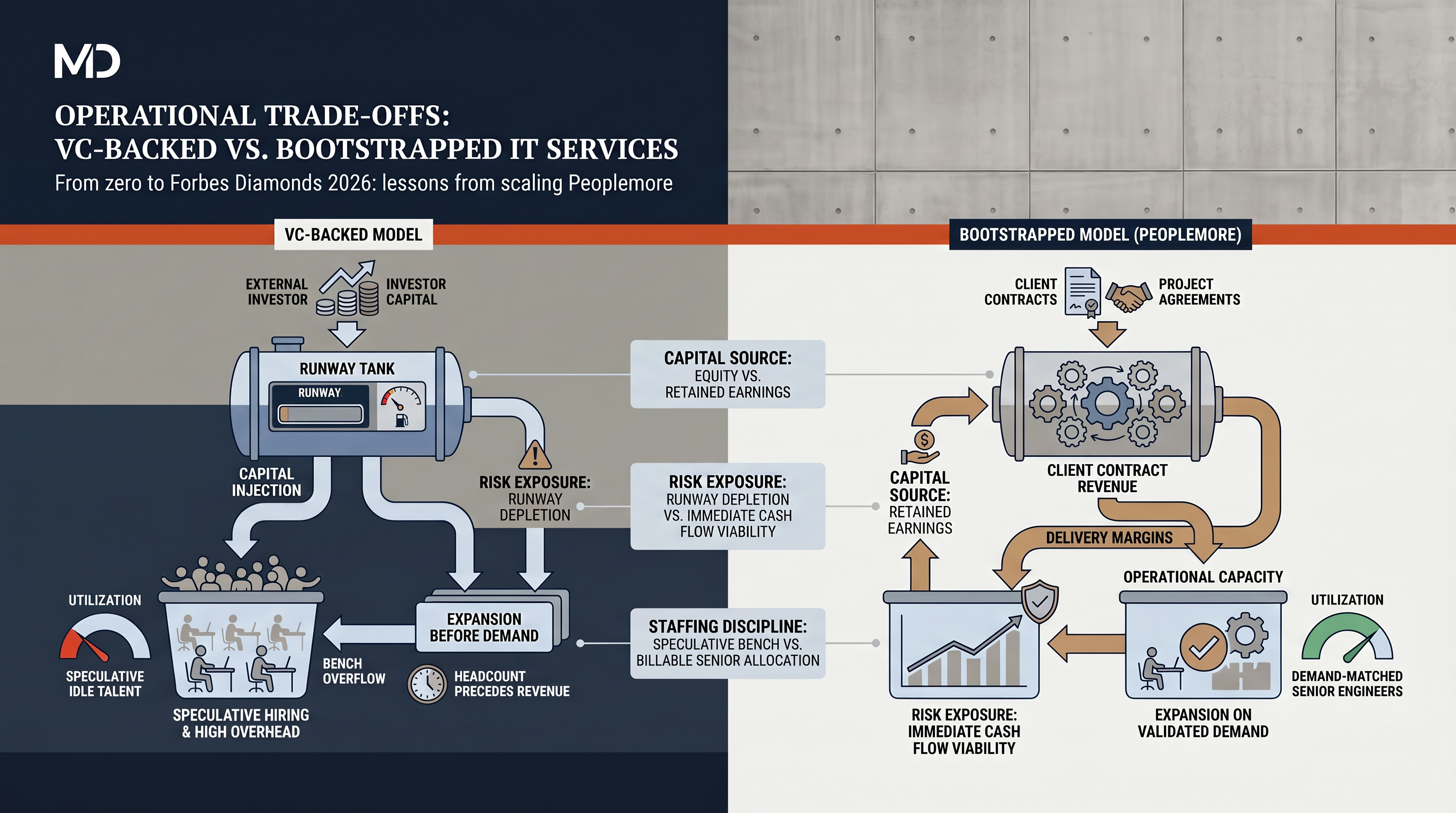
When we started Peoplemore, we wanted something different. No venture capital, no private equity, no outside investors. Growth would be paid for by the business itself. That choice is slower on paper, but it leaves the decisions about what kind of company we build with us.
For us, independence meant three concrete things. First, the freedom to choose our delivery methodology instead of copying whatever looks good in an investor deck. Second, the freedom to build a senior team on our own terms, even when cheaper juniors would make the numbers look better in the short term. Third, the freedom to treat clients as long-term partners, not as a quarterly revenue target set by an external board.
What bootstrapping changes in everyday decisions
Hire against real demand
Without outside capital, every hiring decision is also a cash decision. A venture-funded company can burn runway to grab market share and hire ahead of demand. We could not. Delivery margins pay for expansion, so we hire when there is real work, not for contracts we hope to win.
This discipline forces honest conversations early. When a new opportunity appears, the first question is not „can we sell it?” but „can we deliver it well with the people we have or can realistically bring in?” If the answer is no, it is better to say so before signing than to explain a delay three months later.
Choose projects that pay for the work
A self-funded company cannot afford projects that look good in the sales pipeline and lose money in delivery. Taking misaligned work or heavy discounts just to keep the top line growing can quickly weaken a young company. So we are selective about engagements and careful about scope.
Transparency helps here. Peoplemore states that, in its time-and-materials PMO service, hours, scope and spend are visible as they happen, and budget risks are flagged when they appear rather than after an overrun. That visibility protects the client, and it protects us, because problems surface while there is still time to fix them.
Keep sales and delivery at one table
In many IT services companies, sales and delivery live in different worlds. Sales is rewarded for signing, delivery is blamed for what was signed. In a bootstrapped company, you cannot afford that split, because every loss-making project comes straight out of your own pocket.
So at Peoplemore we treat a deal as a shared decision. The people who will deliver the work look at the scope, the estimate and the team before the offer goes out. If something does not add up, it is cheaper to change the offer than to rescue the project later. This is the same idea I described in Delay starts in sales: the problems of a project are often sold together with the contract.
It also changes how we talk to clients. When the team that sold the work is the same team that stands behind it, the conversation is honest from the first meeting. Clients notice that, and it builds trust long before the first sprint review.
Connecting sales commitments to delivery: the Peoplemore Way
A methodology built on my books
Our delivery methodology is the Peoplemore Way. We built it on the practices I described in my books: Managing IT Projects, 10 Rules for Impossible Projects and Klient, klient, klient!. It connects what we promise commercially with how projects are governed and run.
Peoplemore describes five steps: diagnose actual delivery, bottlenecks and hidden risks; mobilise experienced project managers and Scrum Masters matched to the technology; establish roles and short decision loops between business and IT; demonstrate working software every sprint; and transfer knowledge and organised processes to the client’s team. Project managers and analysts own the current plan, risk register and decision log, while governance defines escalation paths and collaboration between business, IT and vendors.
Presales grounded in delivery reality
Many delays are set in motion before the project starts, although sales is never the only cause. Our presales process grows out of the same ideas I described in my books.
During offer preparation, product managers should check the offer against product roadmaps, engineering should estimate the cost and time of missing features, and maintenance should check whether SLA requirements can be met. A schedule that is theoretically possible must also account for the actual availability of people, including existing obligations and work in progress. Presales and sales should not trade off cost, scope or schedule on their own; important decisions need approval from the part of the organisation that will deliver them. And the real project team should take part from the start, so that timelines, scope, acceptance criteria and SLA parameters are realistic.
Senior teams in two weeks, without lowering the bar
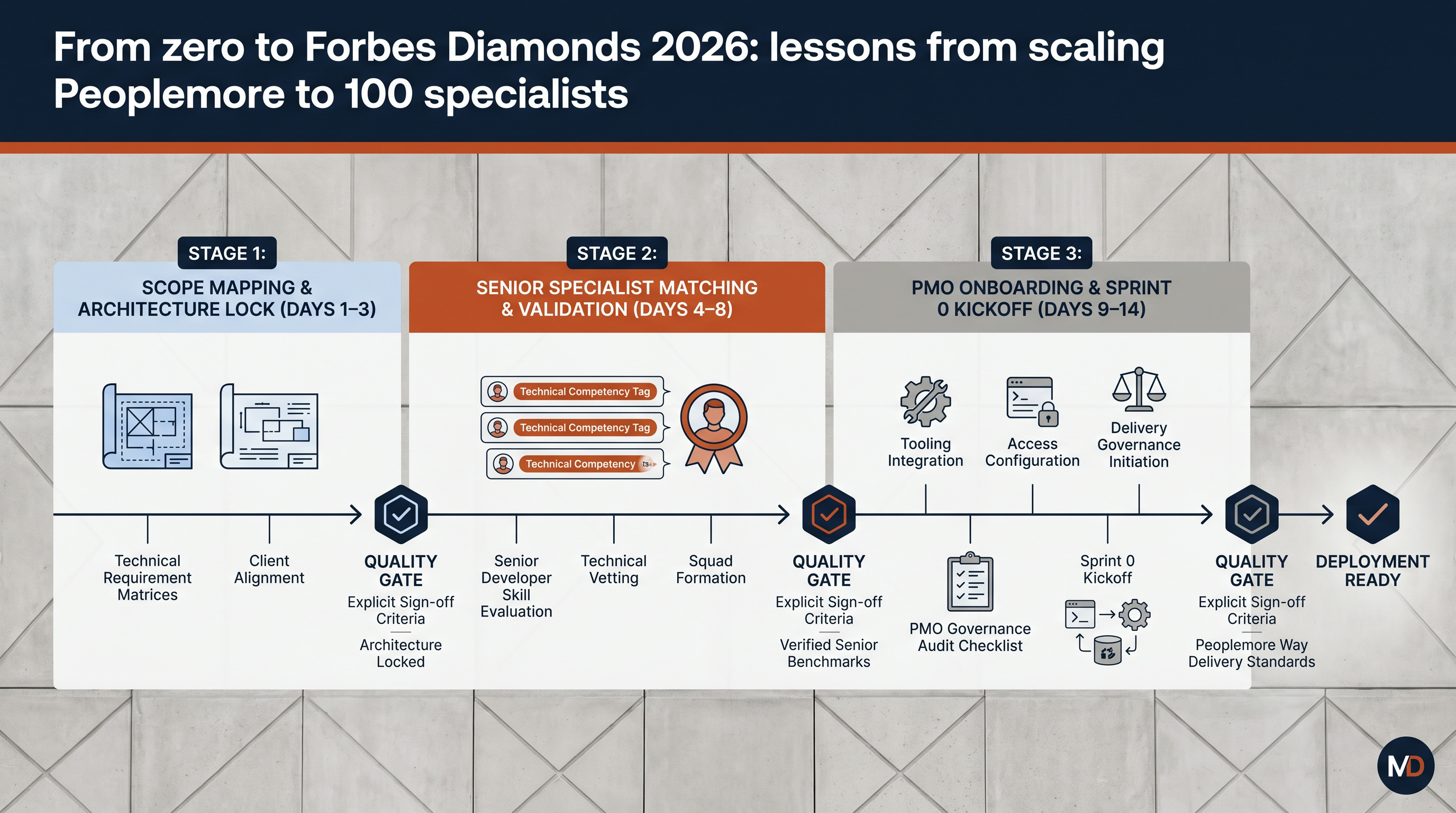
We can build a project team in about two weeks. That is a capability, not an unconditional guarantee, and it works because of one decision we made early: we staff mostly with senior engineers and technology specialists. For a demanding project, experienced people are what you need at the start, and that is where we invest first.
This is a lesson I first wrote down years ago. For key project roles, a smaller team of highly experienced, and therefore more expensive, people is better than a larger group that lacks the skills and is still learning. At the start of a project, you need people with experience, domain knowledge, the confidence to work with the client, assertiveness, and a vision of the future system. Putting someone with one year of experience in charge of a demanding project with a tight schedule is very risky, even if a specialist from the market costs twice as much.
For a bootstrapped company, this choice is not obvious. Juniors are cheaper and easier to find. But for key roles, experience matters more than headcount, and in a self-funded company that trade-off is visible on every project.
What would we do more deliberately if we started again? We would treat the two-week team promise as something to check while preparing the offer, not after signing. My own books say it clearly: a schedule that is theoretically possible must still account for the real availability of people, including existing obligations and work in progress. In the first months of a company, when every hire matters, that check is easy to skip. It should not be. We would also hold the line on seniority for key roles even earlier, because a smaller team of experienced people is better than a larger team that is still learning.
From zero to Forbes Diamonds 2026
The milestones
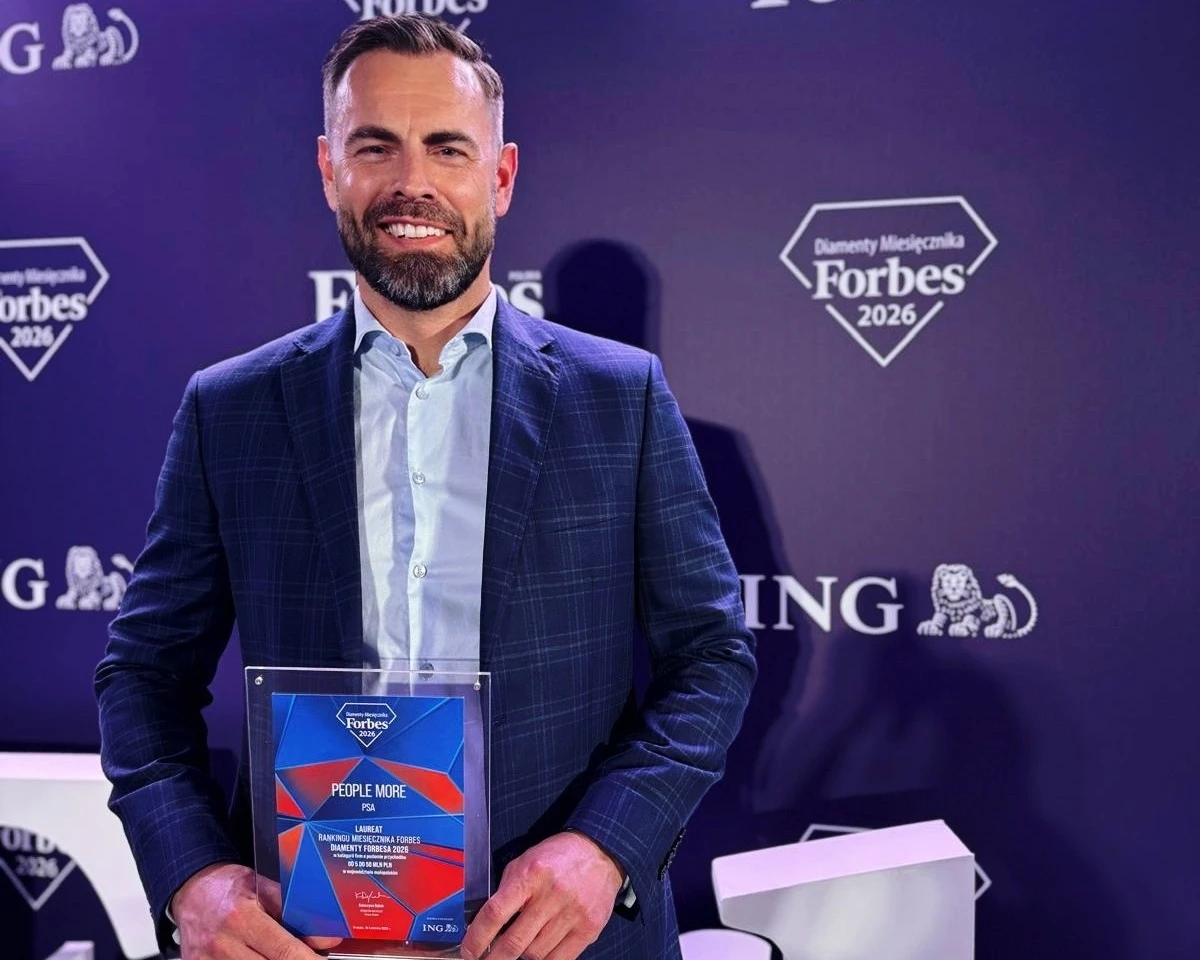
We grew Peoplemore from zero to about 100 specialists, most of them senior engineers, without external funding. We were awarded at the Forbes Diamonds 2026 gala, where Peoplemore was ranked among the top 3% fastest-growing companies in Poland in the revenue category up to PLN 50 million. We treat the award as recognition of commercial traction, not as proof that every practice is perfect.
What Peoplemore delivers today
Today we deliver four services: IT Projects PMO run on the Peoplemore Way, AI-driven software delivery that pairs senior engineers with AI tools, team augmentation with senior technology and AI specialists, and AI consulting and AI transformation.
| Service Area | Delivery Model | Client Problems Addressed |
|---|---|---|
| IT Projects PMO | Peoplemore Way, scalable T&M | Delays, overruns, weak governance |
| AI-Driven Software Delivery | Senior engineers with AI tools | Enterprise delivery challenges |
| Team Augmentation | Senior specialists in two weeks | Junior skill gaps, slow ramp-up |
| AI Consulting and AI Transformation | Strategy, audit, implementation and capability building | AI that stops between pilot and production |
Peoplemore describes its IT Projects PMO as time-and-materials project management that can scale from one role to a full PMO as a programme requires. It offers named project managers and analysts matched to the client’s technology and domain, and cites more than ten years of PMO experience in telco, banking, fintech and automotive. The PMO also uses AI to generate status reports from Jira and Git and to flag at-risk tickets. One client testimonial published by Peoplemore says: „Peoplemore successfully delivered all project features within the scheduled timeline and budget constraints.”
Lessons for founders of IT services companies
If you are building an IT services company without outside money, these are the principles we would keep:
- Write your methods down. A methodology on paper, for us the Peoplemore Way, gives new people a shared way of working from the start.
- Choose capability over headcount. A smaller senior team beats a larger team that is still learning.
- Make governance visible. Plans, risks and decisions should be clear to the client as they happen.
- Focus on the client’s business problem. Bring reasoned recommendations, not just fast replies.
Growing without investors is slower in some ways, and we would choose the same path again.
See the companies I co-founded and learn more about how we deliver at peoplemore.pl.